

Digital Culture as the Foundation for Successful Business Transformation
Photo: AdobeStock | 379619539 | Digital Culture as the Foundation for Successful Business Transformation

Digital Culture as the Foundation for Successful Business Transformation

  • TemplinTech Magazine Vol. 1 | Issue 1 | August 2025 ISSN 3033-2435

Digital culture is not just a trend — it is a critical success factor for every organization aiming to thrive in the digital age. Without a culture that embraces change, innovation, and continuous learning, digital transformation efforts are likely to fall short, regardless of the technology implemented.

In today’s hyperconnected and fast-evolving business environment, digital transformation has become a strategic imperative. However, many organizations mistakenly focus only on technology implementation, overlooking the essential human and cultural components that drive sustainable change. At the heart of every successful transformation lies a strong and adaptive digital culture — a culture that empowers teams, fosters innovation, and aligns people with technology-driven goals.

What Is Digital Culture?

Digital culture refers to the collective mindset, behaviors, values, and capabilities that encourage the effective use of digital technologies in everyday work. It reflects an openness to change, an appetite for innovation, collaboration through digital tools, and a strong commitment to lifelong learning and adaptability.

In practical terms, even the most advanced digital tools will fail to deliver value if employees are not motivated, trained, or culturally prepared to use them effectively. Technology alone cannot transform a business — people can.

Digital Culture as a Strategic Business Asset

Organizations that invest in building a strong digital culture gain competitive advantages in multiple areas:

  • Agility and responsiveness: Digitally minded teams can pivot quickly, adapt to market shifts, and introduce innovations faster than their competitors.
  • Enhanced communication: Digital platforms promote transparency, speed up decision-making, and foster cross-functional collaboration.
  • Scalable learning and development: A digital learning culture enables rapid skill-building through e-learning platforms, microlearning, and peer-to-peer knowledge sharing.
  • Talent attraction and retention: New generations seek work environments that reflect their expectations for digital fluency, flexibility, and purpose-driven innovation.

Why Digital Transformation Fails Without Cultural Foundations

Far too often, organizations focus solely on deploying new systems, software, or automation tools — expecting transformation to happen by default. The result is usually disappointing: low adoption rates, employee resistance, and underwhelming returns on investment.

True digital transformation requires a mindset shift that embraces experimentation, challenges traditional hierarchies, and cultivates a culture of innovation. To enable this, companies must:

  • Encourage experimentation and embrace failure as a path to growth and learning;
  • Empower leadership to model digital behaviors and inspire change from the top;
  • Invest in digital literacy and upskilling across all levels of the organization — from front-line workers to executives.

The Role of Leadership in Shaping Digital Culture

Leadership plays a pivotal role in shaping and sustaining digital culture. This doesn’t mean leaders must be tech experts, but they must understand the strategic value of digitalization and champion cultural change. By using digital tools themselves, communicating openly, and rewarding innovation, leaders set the tone for the rest of the organization.

Transformation starts not with a tool, but with trust — and leaders are the first to build it.

Digital culture is the invisible infrastructure of successful transformation. It powers agility, unlocks innovation, and turns strategy into action. No matter the size or industry, every business must embed digital culture at the core of its vision. It’s not a project — it’s a long-term evolution.

Companies that align their technological ambitions with a people-first, culture-driven approach won’t just keep pace with change — they’ll lead it.
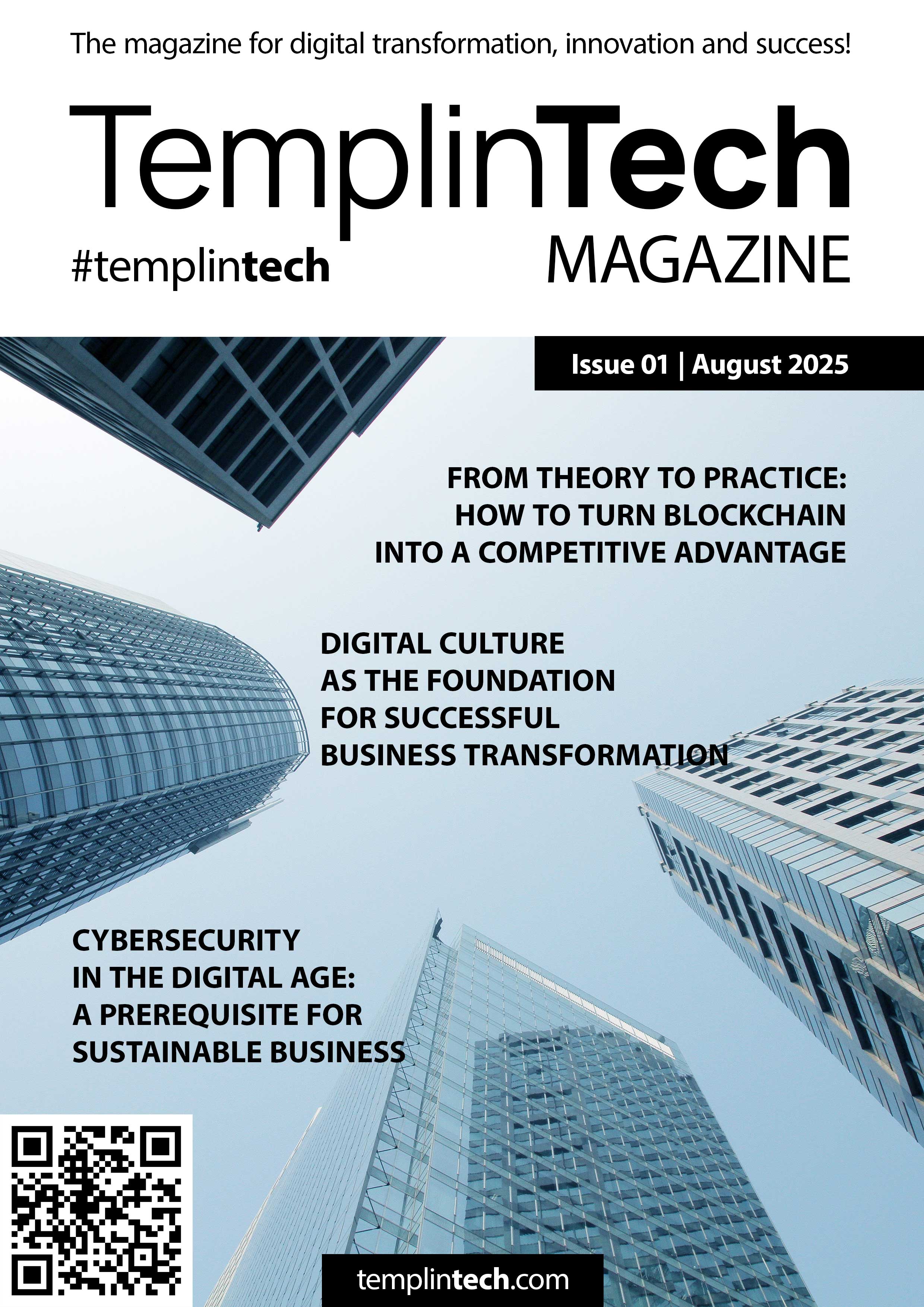

TemplinTech Magazine - Issue 1, August 2025

This article is part of TemplinTech Magazine

Issue 1 • August 2025

View Issue

Yordan Balabanov

Dr. Yordan Balabanov

Expert in digital transformation, strategic approaches, and technology integration.

Words from the author:
“Digital transformation is not limited to technology implementation. It is a synergy of digital culture, strategic thinking, and expert competence – a long-term process that requires vision, knowledge, and resilience.”

LinkedIn  |  yordanbalabanov.com

Are you ready for strategic change through digitalization? Contact me for professional support.

Was this insight valuable to your business?

Download our free app TemplinTech Magazine on Google Play – no ads, no distractions, just focused business insights.

📲 Install from Google Play

Cite this article

APA 7

Balabanov, Y. (2025, August 18). Digital Culture as the Foundation for Successful Business Transformation. TemplinTech Magazine, 1(1). https://templintech.com/magazine/leadership/organizational-culture/digital-culture-as-the-foundation-for-successful-business-transformation
TemplinTech MagazineISSN 3033-2435

Chicago 17

Balabanov, Yordan. “Digital Culture as the Foundation for Successful Business Transformation.” TemplinTech Magazine 1, no. 1 (August 18, 2025). https://templintech.com/magazine/leadership/organizational-culture/digital-culture-as-the-foundation-for-successful-business-transformation.
TemplinTech MagazineISSN 3033-2435

MLA 9

Balabanov, Yordan. “Digital Culture as the Foundation for Successful Business Transformation.” TemplinTech Magazine, vol. 1, no. 1, 18 Aug. 2025, https://templintech.com/magazine/leadership/organizational-culture/digital-culture-as-the-foundation-for-successful-business-transformation.
TemplinTech MagazineISSN 3033-2435
Export

Comments (0)

No comments yet.

Add a comment

Data controller: Dr. Yordan Balabanov. Privacy contact: info@templintech.com. The data you provide are used to publish and moderate your comment, send necessary status notifications and protect the commenting service. privacy information

Data protection details

Legal basis information: Personal data related to submitting, publishing, moderating and securing comments, sending necessary service notifications, preventing abuse and handling reports are processed on the basis of Article 6(1)(f) GDPR. The legitimate interests pursued are providing and maintaining a secure and functional commenting service, protecting the integrity of the website, preventing misuse and enabling effective moderation. Data subjects have the right to object to processing based on legitimate interests in

Retention information: Published comments are retained for as long as the related article and discussion remain publicly available, unless they are deleted earlier by the commenter or the controller or their continued retention is no longer necessary. Associated pseudonymous security, voting and moderation data are retained only for as long as necessary to protect the service, prevent abuse, maintain the integrity of voting and moderation, resolve outstanding reports, comply with applicable legal obligations or establ

Reactions: For signed-in users, vote uniqueness is tied to the Joomla user account. For guests, it is limited to the current first-party Joomla session. TemplinTech Comments does not store an IP address or device fingerprint for vote uniqueness.

Rights, complaints and redress: You may request an internal review of a moderation decision by contacting the privacy or support contact identified by the controller. The decision and the relevant circumstances will be reviewed and, where appropriate, corrected. If your concern relates to the processing of personal data, you also have the right to lodge a complaint with the competent supervisory authority. For a controller established in Baden-Württemberg, this is the Landesbeauftragte für den Datenschutz und die Informationsfreiheit Baden-Württemberg (LfDI BW), Heilbronner Straße 35, 70191 Stuttgart, Germany, poststelle@lfdi.bwl.de. Any other administrative or judicial remedies available under applicable law remain unaffected.

Email address: It is used for necessary comment-related status notifications and secure guest self-deletion and is not displayed publicly. For guest comments, the plaintext email address is removed from the comment record after the publication notification has been successfully handed to the configured mail transport. TemplinTech Comments sends only transactional emails about this comment and does not add marketing content, tracking pixels or advertising identifiers.

Comments are reviewed before publication.

YOU MAY ALSO LIKE

Who Is Really Visiting Your Website: A Person or an AI Agent?
Photo: AdobeStock | 1875895436 | Who Is Really Visiting Your Website: A Person or an AI Agent?
When We Can No Longer Tell What the Original Is, the Provenance of Digital Content Becomes Increasingly Critical
Photo: AdobeStock | 277565929 | When We Can No Longer Tell What the Original Is, the Provenance of Digital Content Becomes Increasingly Critical
Digital Nomads Are Changing the Way We Work and Live
Photo: AdobeStock | 546285773 | Digital Nomads Are Changing the Way We Work and Live
How to Transform a Toxic Organizational Culture
Photo: AdobeStock | 983996320 | How to Transform a Toxic Organizational Culture
Own Your Outcomes, or How to Turn Your Time, Decisions, and Development into Personal Capital
Photo: AdobeStock | 1877049368 | Own Your Outcomes, or How to Turn Your Time, Decisions, and Development into Personal Capital
The Neuromorphic Architectural Paradigm and the Energy Efficiency of Corporate Artificial Intelligence
Photo: AdobeStock | 135296560 | The Neuromorphic Architectural Paradigm and the Energy Efficiency of Corporate Artificial Intelligence
A Strategic Framework for Autonomous B2B Transformation in the Era of Agentic Intelligence
Photo: AdobeStock | 517681376 | A Strategic Framework for Autonomous B2B Transformation in the Era of Agentic Intelligence
XSS (Cross-Site Scripting) as a Business Risk: Management, Control, and Competitive Advantage
Photo: AdobeStock | 376359064 | XSS (Cross-Site Scripting) as a Business Risk: Management, Control, and Competitive Advantage

TemplinTech™ Magazine

TemplinTech™ Magazine – a business publication focused on leadership, technology, innovation, and digital transformation.
ISSN 3033-2435, registered by the Bulgarian National Library. Place of publication: Sofia, Bulgaria.

CONTACT

Contact person: Dr. Yordan Balabanov
Phone: +49 176 376 708 10
Email: info@templintech.com
Business hours: Mon–Fri: 09:00–16:00 (CET/CEST)

© 2025–2026 TemplinTech™. Operated by Dr. Yordan Balabanov. All rights reserved.


Open to strategic partnerships and value-driven business proposals. If your project requires professional expertise or you are looking for high-level collaboration, feel free to reach out to discuss specific objectives.

Best regards,
Yordan Balabanov ∴